


System design Comunicantes vessels.
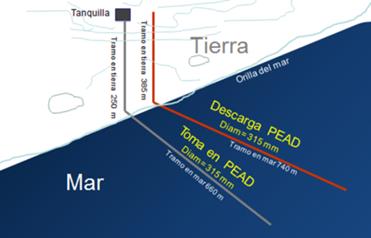
Pipes scheme intake and discharge
The thermoelectric plant will provide water for industrial processes through a desalinator system, which will capture seawater through a simple system of communicating vessels. This is composed of a pit as pumping station and HDPE pipe 315 mm in diameter and 906 m length, which connects and continuously feeds the sea during pumping pit water. This design was proposed by the engineering company Vepica C.A. and was approved by the inspection company C.A INELMECA, both Venezuelan companies with great experience in the area of consulting engineering.
One of the challenges presented by this project was the construction of the system of communicating vessels, which had no previous similar experience in the country. ELINSUBCA C.A being selected and a specialist in the construction of submarine pipelines systems HDPE company, presented a coherent constructive design in three stages of development:
-
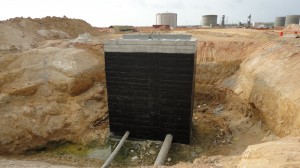
Fosa de bombeo para Toma de Agua de Mar
PUMPING PIT: reinforced concrete structure built to receive and store seawater from outlet pipe with dimensions: 4.25 m x 6.50 m x 9.20 m (width x length x height). The complexity in its construction was determined by the excavations below the water table, as being just 300 meters from the shore of the beach, the sea level is 4.5 m above the floor of the pit. This structure suction pumps that carry seawater desalination system will be installed.
- PIPELINE TAKES: Installation of 906 m of HDPE pipe Ø 315 mm, consisting of a stretch of land 250 m from the pit to the point of entry to the sea (transition zone) and 656 m of pipe weighed down with anchors reinforced concrete and buried in the seabed. This underwater pipeline built into the pump pit, keep the connection to the sea to complete the system of “Feed Comunicantes Vessels”.
- DISCHARGE PIPING: installation of an outfall in HDPE 1124 m in total length and Ø 315 mm, consisting of a stretch of land of 384 m ranging from a pit of loading to the sea, and a submarine section 740 m anchors weighed down with concrete and buried in the seabed. Through this pipe the water already treated product of industrial processes thermoelectric plant, including the reject water from the desalination plant is returned, discharged through a diffuser built with 6 outlets 75 mm in diameter, each connected to type duck bill valves to improve the initial dilution of the effluent discharged into the sea.
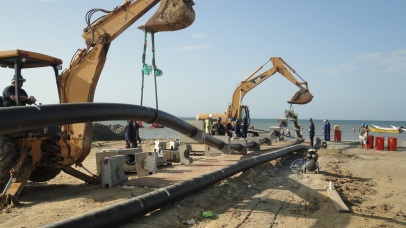
Launch Pipes – Stretches Submarines
The intake and discharge pipes were built in long stretches of approximately 300 m, connected to the sea through a technology developed by Elinsubca that significantly reduces execution times and the risk of industrial accidents. Thanks to this constructive proposal was possible to complete the work within a period of four months, with zero accidents and full operation of the system.
With the development of this work, Venezuela has considerable experience in building power systems seawater communicating vessels, this being evidence of ideal solution for powering desalination plants and cooling systems in power plants by employing of HDPE submarine pipelines.
Marketing Management of Elinsubca C.A
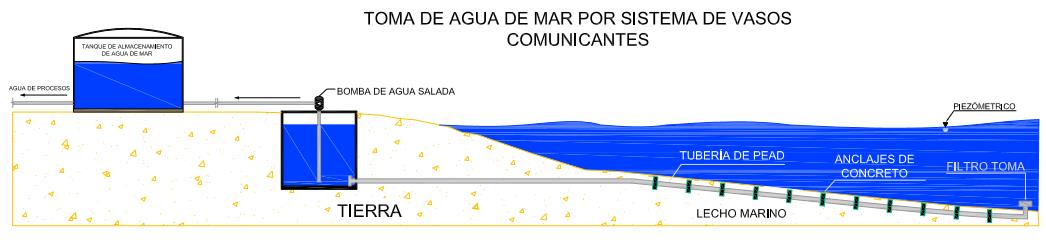
Take Seawater System by Communicating Vessels







Excelente trabajo
Estimado ingeniero Juan Aceituno, nos es grato que los artículos publicados le sean de utilidad. Estamos para servirles. Muchas gracias.
Excelente articulo e interesante su trabajo, pero me hago la siguiente interrogante ¿Que ventajas me brinda el procedimiento implementado por ELINSUBCA?
Espero su pronta respuesta, para el análisis de posibles proyectos.
Hola Carlos,
Gracias por tus comentarios. En cuanto a tu pregunta te indico que podríamos hacer una reunión vía skype para entender las características de tu proyecto, sin embargo son varias las ventajas que ofrece la metodología de trabajo que Elinsubca ha desarrollado, te menciono tres muy importantes:
1o.-Menores costos en la construcción ya que optimiza el uso de los recursos que se encuentran en la zona de trabajo: embarcaciones, personal, maquinarias, etc.
2o.-Menores tiempos de ejecución, por cuanto se instala en tramos largos que se hunden de manera muy rápida.
3o.-Menores riesgos de accidentes laborales, ya que se disminuye la incidencia de trabajos submarinos: usamos tecnología propia para el acoplamiento de tuberías en el mar.
Existen otras ventajas pero que podríamos evaluarlas en cada proyecto de manera particular…
Saludos
Muy buen Artículo, pero me queda una duda con respecto al tipo de filtro de la toma de agua, como solucionan el problema de algas u otras especies que lo puedan tapar o ingresar a través de el…. saludos
Hola Héctor, gracias por tu comentario, nos complace que los artículos te sean de utilidad. En cuanto al filtro toma, existen varias soluciones para controlar su obstrucción que deben ser contempladas desde su diseño, básicamente con el uso de materiales adecuados que afectan el crecimiento de organismos, además del control por iluminación, bien sea contandose con un ambiente naturalmente oscuro, o en caso contrario diseñándose un filtro con una cámara oscura. Te recomendamos leer el siguiente artículo http://www.elinsubca.com/2012/10/18/diseno-de-filtro-toma-submarino/#comments
Buenos días. Excelente información pero me pregunto si tienen un sistema para sanitización en caso de presencia de micro y macroorganismos. ¿con qué tecnología trabajan?